
Root Canal Treatment in Dubai
Save Your Natural Tooth
Gentle, modern root canal treatment that relieves pain and preserves a tooth that would otherwise be lost. Carried out at our Mirdif clinic by experienced dentists.
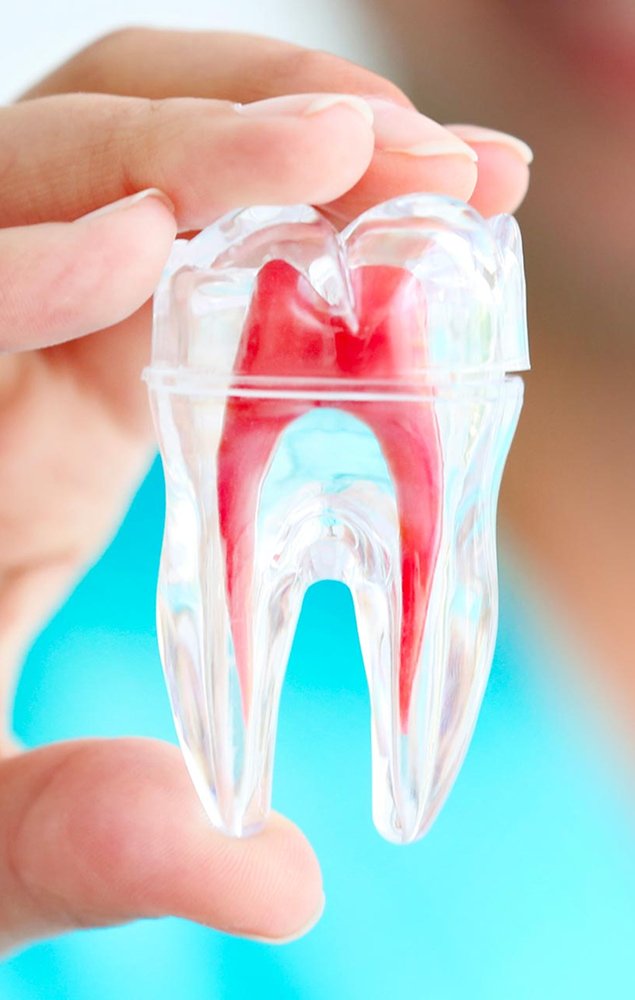
Root Canal Treatment in Dubai
A root canal treats infection or inflammation deep inside a tooth, in the soft pulp that holds the nerve and blood supply. When decay, a crack, or trauma lets bacteria reach the pulp, it can cause pain, swelling, and sensitivity, and if left untreated, the tooth is often lost.
Root canal treatment removes the infected pulp, cleans and disinfects the inside of the tooth, and seals it, allowing you to keep your natural tooth rather than extract it. At Pure White, our dentists in Mirdif carry out root canal treatment with modern techniques and anaesthetic, so the experience is far more comfortable than its old reputation suggests.
Once the tooth is treated and sealed, it’s usually restored with a filling or crown to protect it and return it to full function.
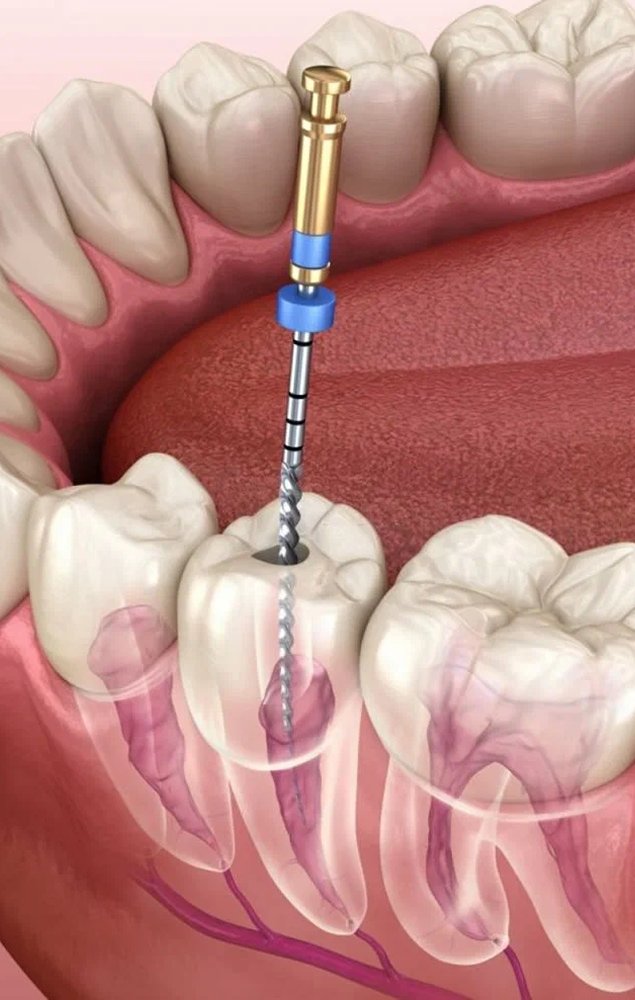
How Root Canal Treatment Works
Treatment is completed in one or two visits depending on the tooth and the level of infection.
Signs You May Need a Root Canal
- Persistent toothache or throbbing pain
- Lingering sensitivity to hot or cold
- Pain when biting or chewing
- Swelling or tenderness in the nearby gum
- A darkening or discoloured tooth
- A recurring pimple-like spot on the gum
Only a dental examination and X-ray can confirm whether a root canal is needed; some of these signs can have other causes.
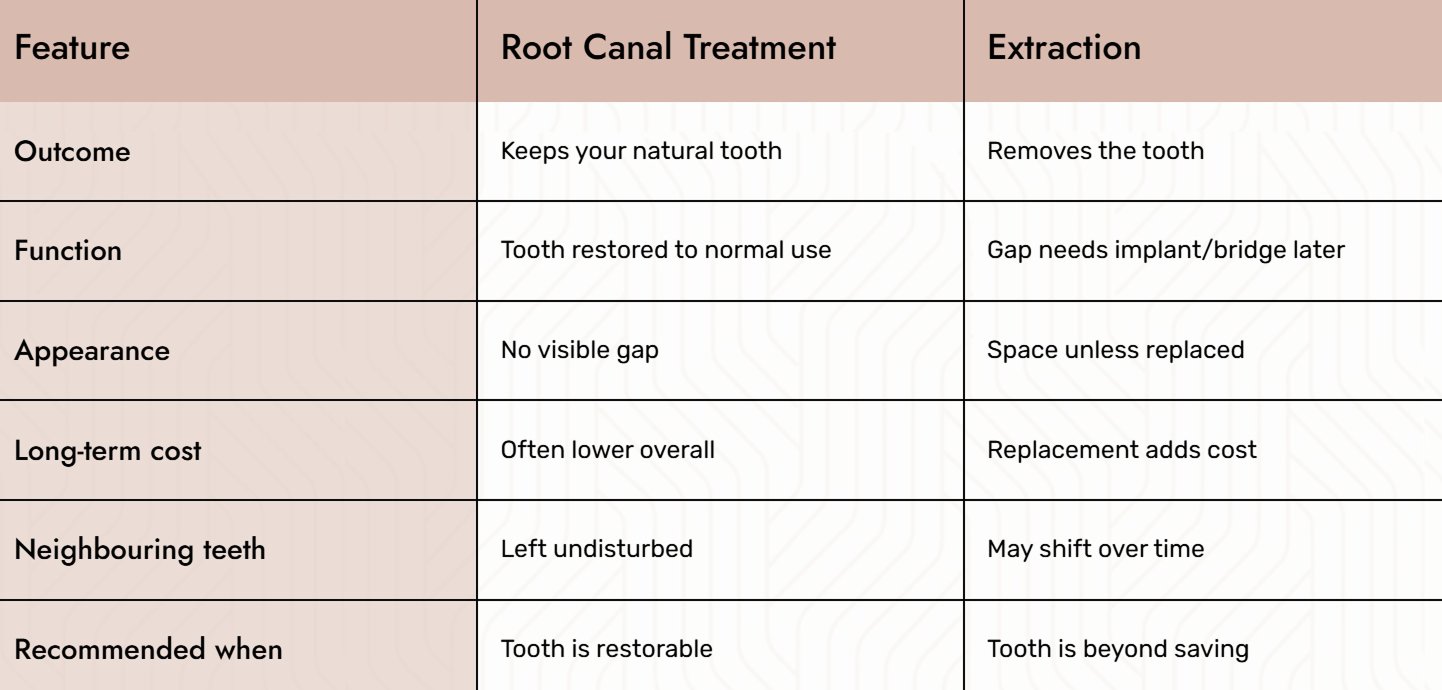
Root Canal Treatment VS Extraction
Feature
Function
Is This the Right Choice for You?
Composite fillings are a good fit for:
- Ongoing tooth pain that doesn't settle
- A deeply decayed tooth where the nerve is affected
- A cracked or damaged tooth with pulp involvement
- An abscess or gum swelling near a specific tooth
- A tooth you'd rather save than have extracted
If an examination shows the tooth is beyond repair, your dentist will discuss extraction and replacement options such as an implant or bridge.
What to Expect During Treatment
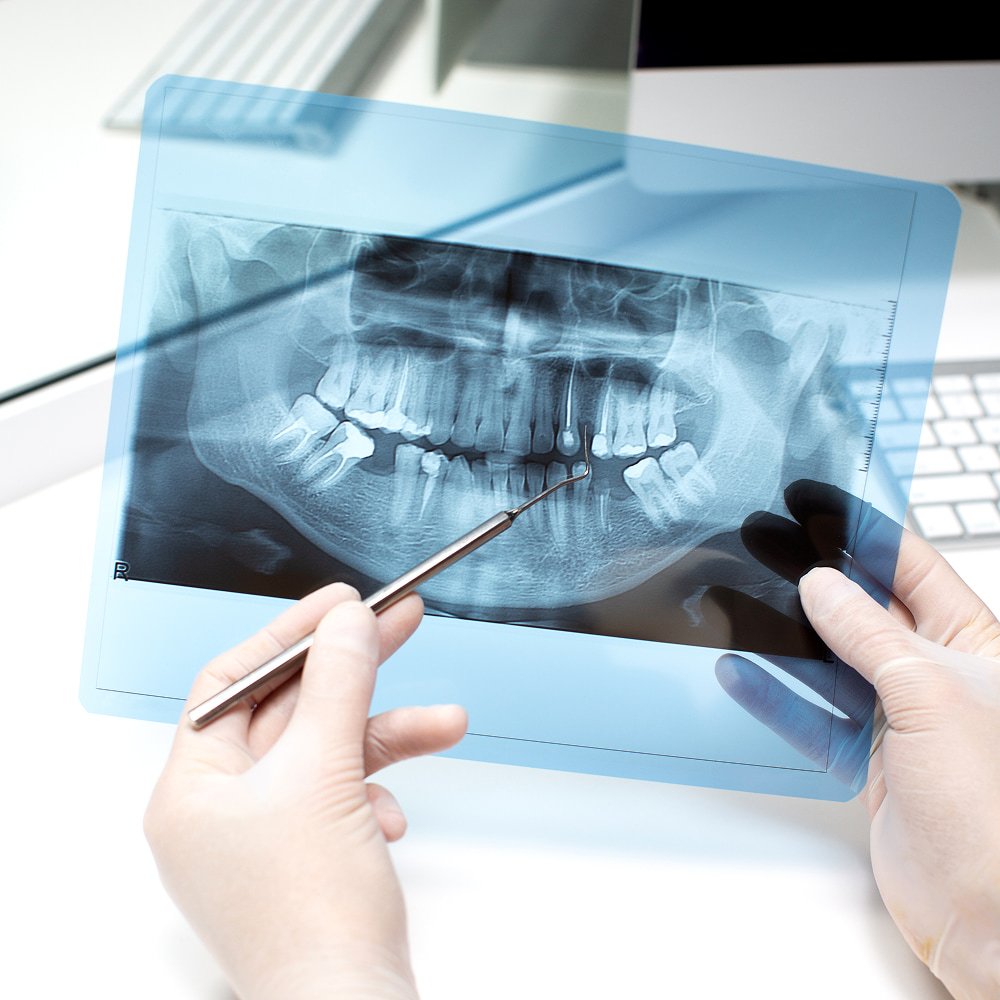
Examination & X-ray Your dentist assesses the tooth and takes an X-ray to see the root canals and the extent of infection.
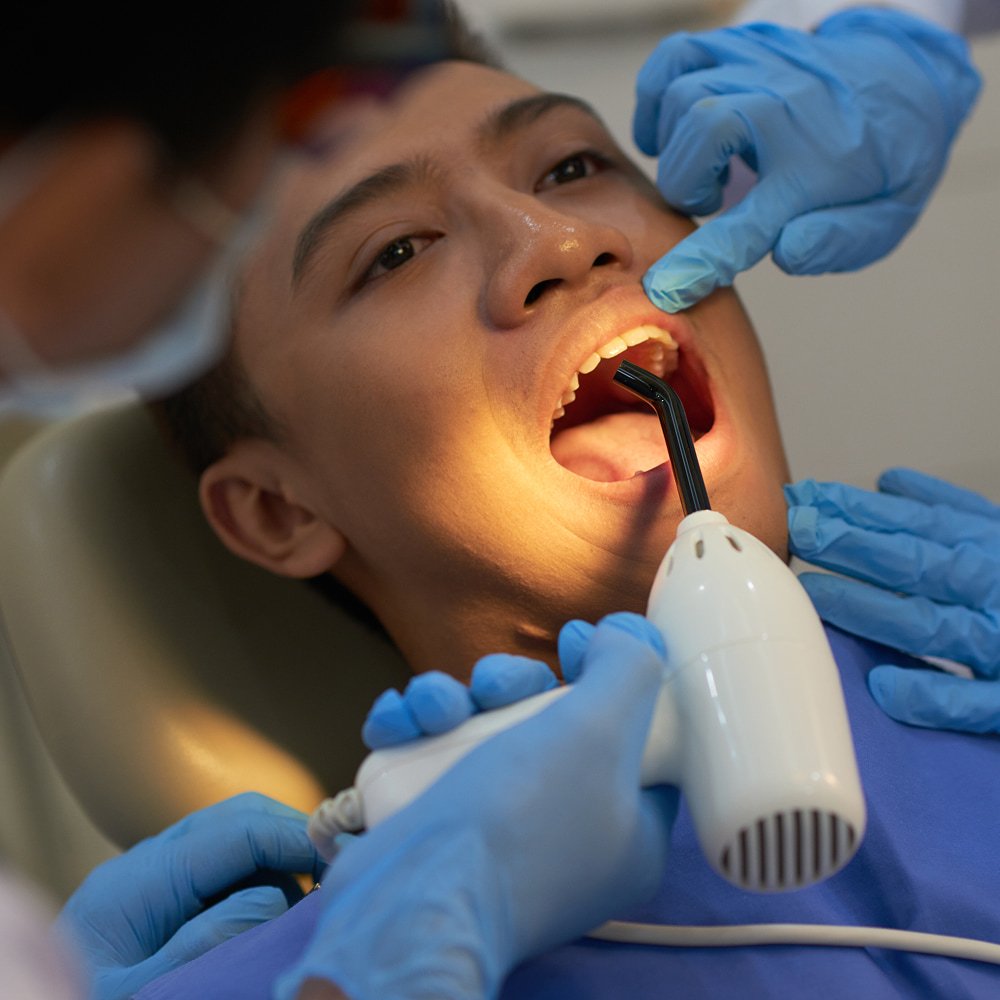
Anaesthetic The area is fully numbed so the procedure is comfortable throughout.
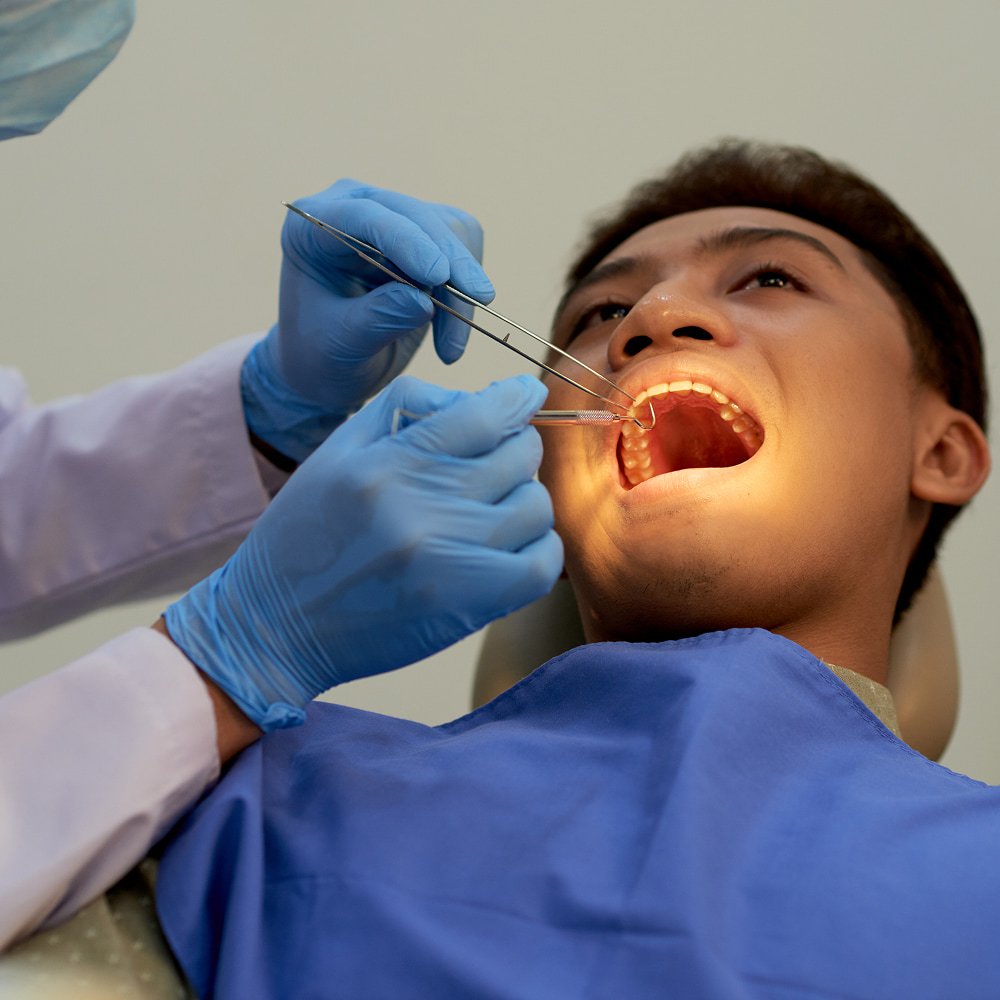
Cleaning the Canals The infected pulp is removed, and the canals are cleaned, shaped, and disinfected.
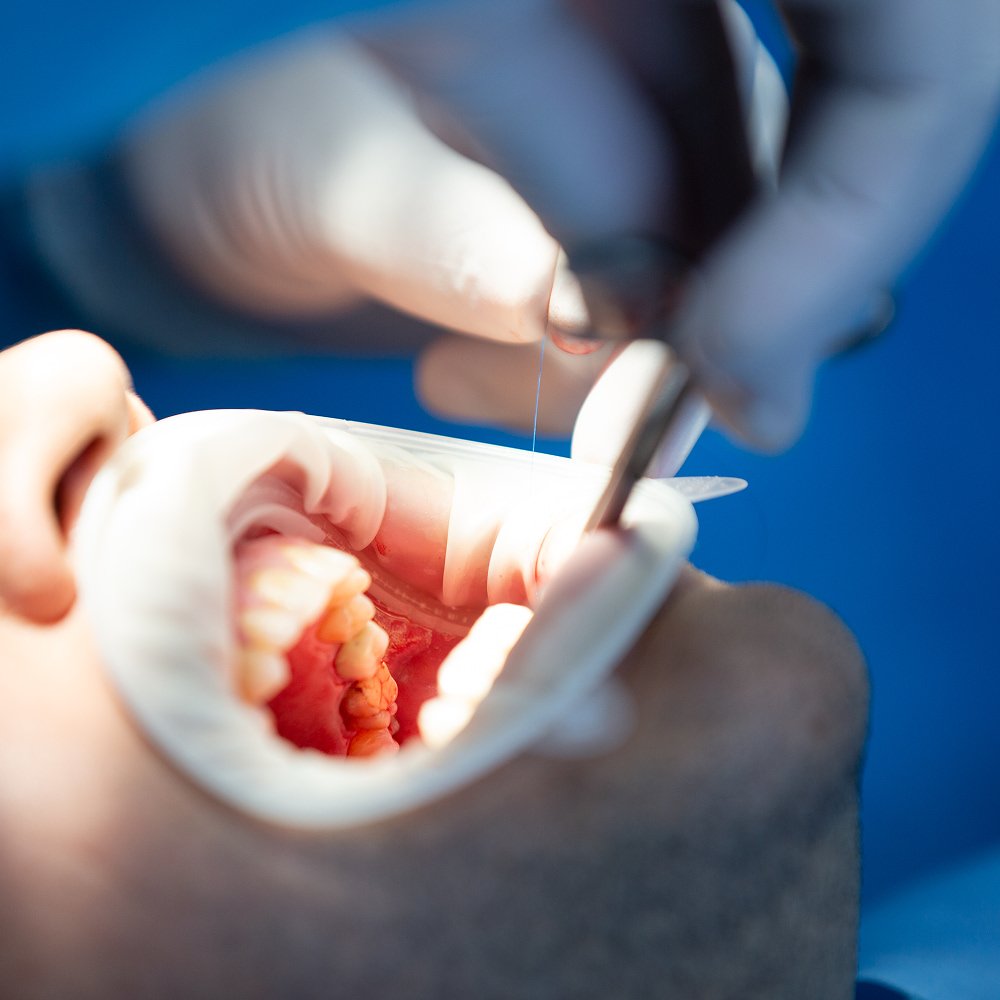
Sealing The cleaned canals are filled with a sealing material, and the tooth is temporarily or permanently closed.
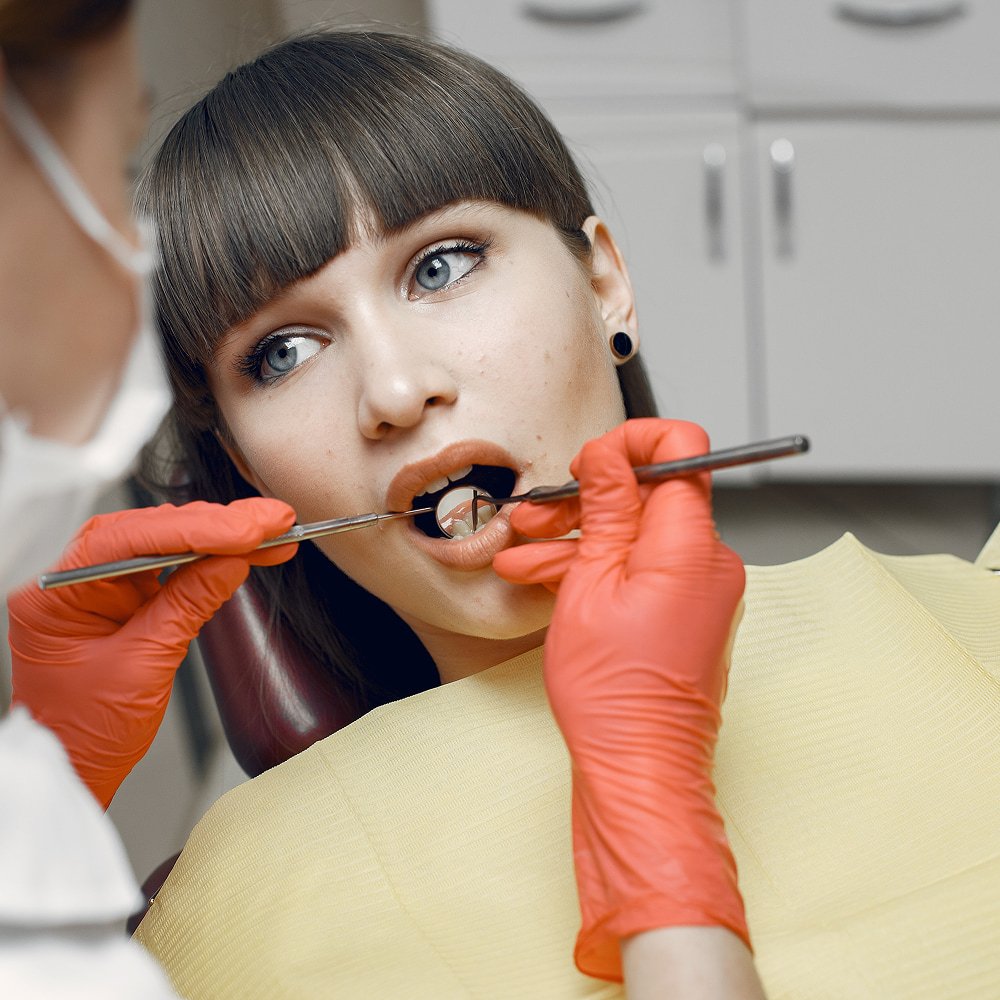
Final Restoration The tooth is restored with a filling or crown to protect it and return it to full strength.

Typical Treatment Time
Trusted by Families Across UAE
EXCELLENTTrustindex verifies that the original source of the review is Google. Amazing clinic and friendly stuff 🌟 recommended!Posted on GoogleTrustindex verifies that the original source of the review is Google. Best clinic ever Best doctor Zana Beatifull receptionist Loren and DoniaPosted on GoogleTrustindex verifies that the original source of the review is Google. Best experience with Dr.RagheedPosted on GoogleTrustindex verifies that the original source of the review is Google. I have been suffering from hyper pigmentation from long time, I tried many clinics and no one gave me results as good as Doctor Zana, he is professional and I noticed a difference in my skin from the very first session. The staff is very nice and kind as well.Posted on GoogleTrustindex verifies that the original source of the review is Google. Great laser service with very friendly staff and amazing results. Definitely recommend this clinic!Posted on GoogleTrustindex verifies that the original source of the review is Google. خدمات العيادة جدا جميلة والناس الي يشتغلون فيها جدا خلوقين .. وايد حابة النتيجةPosted on GoogleTrustindex verifies that the original source of the review is Google. Good calm place .helpful staff..excellent servicePosted on GoogleTrustindex verifies that the original source of the review is Google. Excellent service. Very caring, very good higyn, excellent productsPosted on GoogleTrustindex verifies that the original source of the review is Google. Amazing skin service and very professional staff. I am very happy with the results — The team was friendly, knowledgeable, and made the whole experience comfortable. Definitely recommend!Posted on GoogleTrustindex verifies that the original source of the review is Google. The laser session with muna was very good she is very profeesional , even the receptionist she is very nice and welcoming
After Your Root Canal
- Discomfort: mild tenderness for a few days is normal and usually eases with simple pain relief.
- Eating: avoid chewing on the treated tooth until it's fully restored, especially before a crown is placed.
- Protection: a back tooth often needs a crown afterwards to prevent fracture — your dentist will advise.
- Hygiene: brush and floss normally; the treated tooth is cared for like any other.
Considering Other Treatments?
- Composite Fillings — for decay that hasn't reached the nerve
- Scaling & Polishing — professional cleaning to protect your teeth and gums
- Restorative & Preventive Overview — the full range of restorative care
Meet Your Orthodontist in Mirdif



In Pain? Let's Save Your Tooth

Frequently Asked Questions
Is a root canal painful?
How many visits does a root canal take?
Will I need a crown after a root canal?
Can I just have the tooth pulled instead?
How long does a treated tooth last?
What happens if I delay treatment?